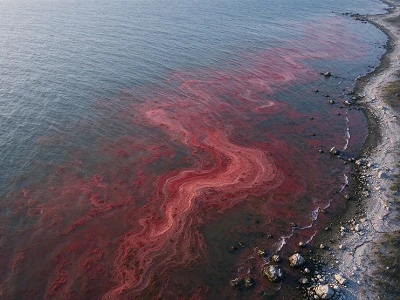
COD stands for Chemical Oxygen Demand. It is used to measure the amount of organic pollutants in water. The higher the COD value, the more severe the pollution. COD represents the amount of oxygen consumed to oxidize the reducing substances in a water sample, and its unit is usually mg/L. It is commonly used in water quality monitoring, such as the testing of rivers, industrial wastewater, and municipal wastewater, and is one of the important indicators for determining whether a water body is polluted.
TOC stands for Total Organic Carbon. It is a water quality indicator that characterizes the total amount of organic matter in water by carbon content. Results are expressed as the mass concentration of carbon (mg/L) and are used to evaluate the degree of organic pollution in a water body.
TOC and COD are positively correlated. Both are used to assess the degree of organic pollution in a water body, but their measurement principles differ. There is no fixed conversion ratio between them, and the empirical COD-to-TOC ratio is usually between 2.66 and 3. TOC measures the total carbon content of organic matter in water, while COD measures the amount of oxygen consumed in oxidizing organic matter. During the oxidation of organic matter, carbon and oxygen follow a stoichiometric relationship. Theoretically, 1 g of carbon requires 2.66 g of oxygen for complete oxidation. The COD value is usually about 2.66 times the TOC value. However, the composition of organic matter in actual water samples is complex and contains elements such as hydrogen, nitrogen, and sulfur; the COD-to-TOC ratio therefore fluctuates between 2 and 3.73 depending on pollutant type (e.g., approximately 2.67 for glucose and 2–3 for certain pharmaceuticals).
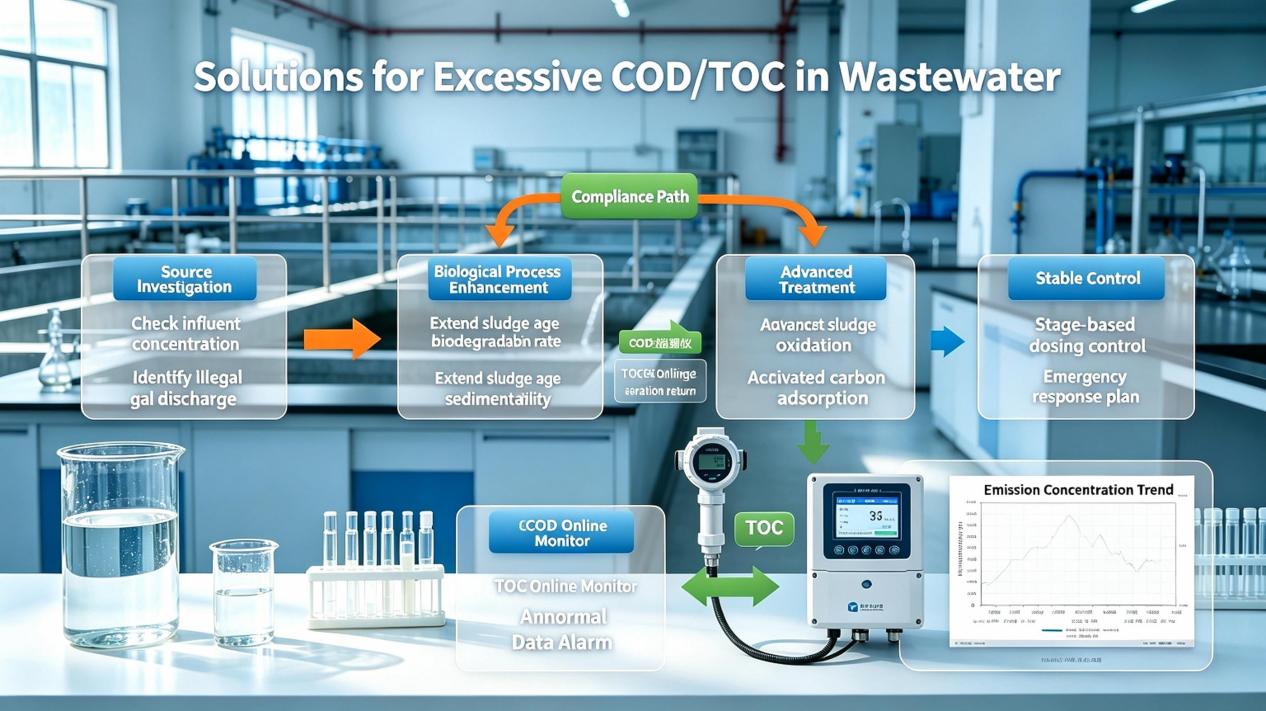
Countries around the world select COD or TOC as the main indicator in wastewater treatment according to their own actual conditions, but both specifically indicate the severity of water body pollution. In practice, they are generally used interchangeably.