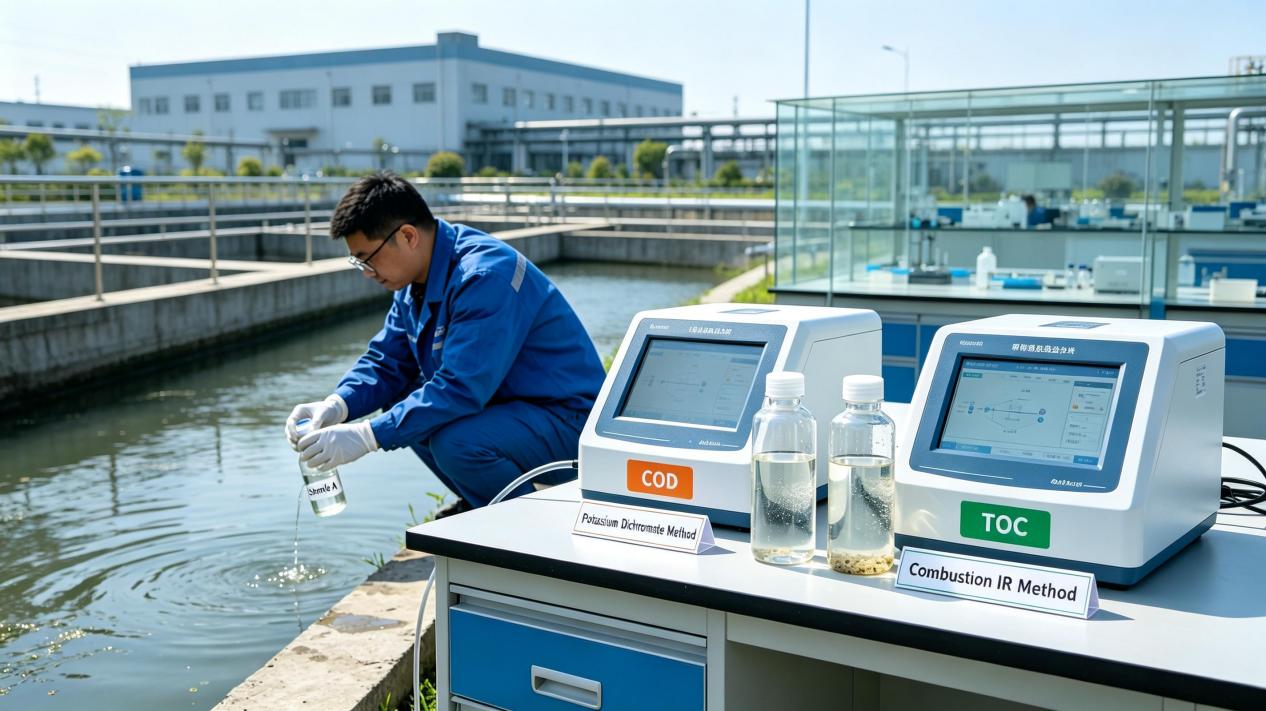
COD/TOC treatment is a primary objective in wastewater treatment. When this parameter exceeds the limit, first troubleshoot the issue to identify the cause, then take emergency measures and adjust the process. The core approach is to optimize the biological treatment system with supplementary chemical treatment. The specific treatment solution should be selected according to the degree of exceedance, wastewater type, and site conditions.
1. Rapid Troubleshooting and Emergency Response
Identify the source of exceedance. Check influent water quality monitoring data and determine whether there is abnormal discharge of food service wastewater or industrial wastewater, or equipment failure in treatment units (such as bar screen blockage).
Emergency COD reduction measures:
Reduce the influent flow or suspend influent to reduce system load. Increase the aeration rate and control dissolved oxygen (DO) at 2–4 mg/L to promote aerobic microbial degradation of organic matter. Dose activated carbon to adsorb recalcitrant organic matter; the reference dosage is 10–50 mg/L for biologically treated effluent and 100–300 mg/L for printing and dyeing/chemical wastewater. Use chemical oxidants (ozone, hydrogen peroxide, sodium hypochlorite) to achieve rapid oxidative degradation of organic matter.
Adjust water quality parameters: When influent pH is abnormal, neutralize it to neutral first. When water temperature is too low, reduce sludge discharge volume and increase sludge concentration.
2. Process Adjustment and Biological Treatment Optimization
DO control: Maintain 2–3 mg/L in the aerobic zone, below 0.5 mg/L in the anoxic zone, and below 0.2 mg/L in the anaerobic zone. Adjust blower frequency promptly based on the online DO analyzer.
Sludge return ratio adjustment: The sludge return ratio is generally controlled at 40%–70%. Increasing the return ratio can increase the microbial concentration in the aeration tank. The internal recycle of nitrified liquor should preferably be controlled at 200% to ensure denitrification in the anoxic zone.
Sludge concentration management: For municipal wastewater, mixed liquor suspend solids (MLSS) is controlled at 3000–5000 mg/L. For industrial wastewater, it generally does not exceed 10000 mg/L. Adjust according to influent concentration and seasonal variations.
Bioaugmentation agent dosing: When sludge loss or aging occurs, dose activated sludge or microbial agents to rapidly restore treatment capacity.
3. Chemical-Assisted and Advanced Treatment Solutions
Physicochemical pretreatment: For high-strength wastewater, carry out pretreatment such as coagulation-sedimentation, iron-carbon micro-electrolysis, and Fenton oxidation to reduce organic concentration and improve biodegradability.
Advanced treatment processes: Activated carbon adsorption-powdered activated carbon acts quickly and is suitable for emergency use, while granular activated carbon is regenerable and suitable for continuous treatment. Membrane filtration-ultrafiltration retains suspended solids, and reverse osmosis desalination is suitable for water reuse. Catalytic ozonation-removes recalcitrant organic matter and color without secondary pollution.
Overall, for COD/TOC exceedance, first identify the source and select an appropriate emergency solution. Process adjustments should then be made based on the identified source to fully resolve the exceedance.