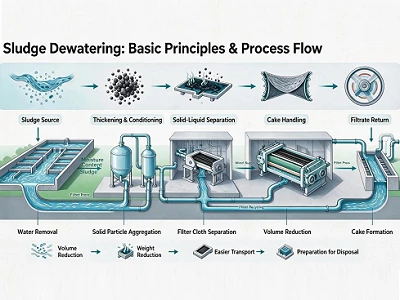
In sludge dewatering, auxiliary sludge treatment chemicals are often required to accelerate the separation of free water, capillary water, and adsorbed water, condition interstitial water, and make sludge dewatering smoother and the sludge cake drier.
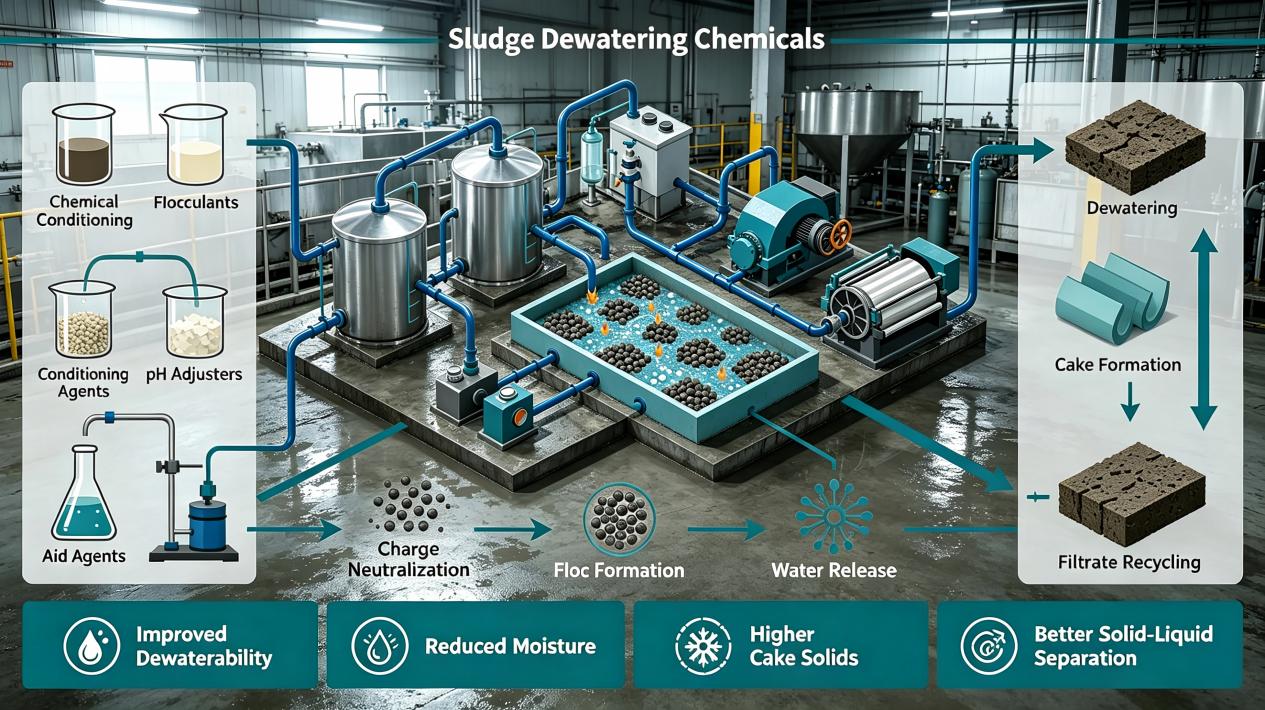
Common dewatering chemicals mainly include the following categories:
1. Cell wall breaking agents, such as lime, caustic soda flakes, sodium hypochlorite, ferric chloride, and other strong acid/alkali and strongly reactive products. They mainly adjust pH, break cell walls, and release interstitial water.
2. Coagulants, such as polyaluminum chloride, polyferric sulfate, aluminum sulfate, ferrous sulfate, polyaluminum ferric silicate, and other inorganic coagulants. They mainly target free water and capillary water, accelerate mud-water separation, and improve the permeability of sludge flocs.
3. Flocculants, such as polyacrylamide and sodium polyacrylate, and other organic high-molecular-weight polymers. They can enlarge the small flocs produced by coagulants, further accelerate mud-water separation, and improve the permeability of sludge flocs.
The above three types of chemicals are all intended to achieve rapid mud-water separation and lower sludge cake moisture content. They can all be collectively referred to as sludge conditioners and can be selected through bench-scale tests according to on-site sludge conditions.