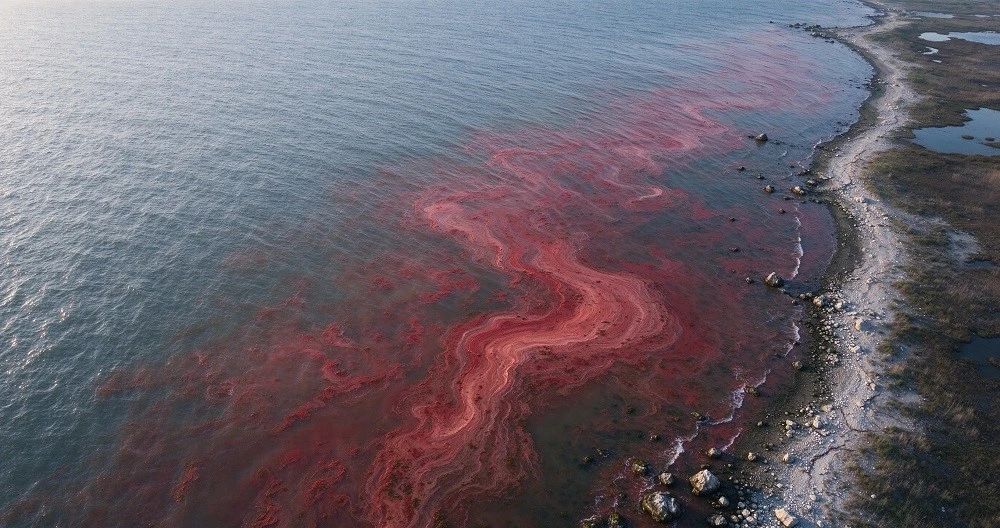
Total phosphorus exceeding standards is a common problem in wastewater and leads to many issues, the most common being water eutrophication, such as red tides. The common solutions for treating total phosphorus exceeding standards include the following:
I. Biological method
This utilizes the characteristics of phosphorus-accumulating organisms (PAOs), which release phosphorus under anaerobic conditions and excessively absorb phosphorus under aerobic conditions, combined with biochemical sludge settling and sludge discharge to remove total phosphorus from wastewater. However, it should be noted that this method can only address relatively low total phosphorus levels (1–6 mg/L). If the total phosphorus level is higher or lower, it needs to be combined with other processes.
II. Chemical precipitation method
This utilizes the reaction of orthophosphate with iron salts, aluminum salts, ferrous salts, calcium salts, etc., to form insoluble phosphates with extremely low solubility product constants. The reaction equation for iron salts is expressed as:
Fe³⁺ + PO₄³⁻ → Fe₂(PO₄)₃↓
This method can reduce total phosphorus to as low as 0.1 mg/L and offers extremely high cost-effectiveness. It is commonly used as a supplementary method for advanced total phosphorus treatment. However, it should be noted that this method is limited to the treatment of orthophosphate. Therefore, it is best for the site to have supporting biochemical treatment processes operating normally, ensuring that total phosphorus is basically converted into orthophosphate for compatibility with the process.
III. Struvite precipitation method
This is also a precipitation process, but it is suitable for sites with ultra-high total phosphorus levels. Reaction principle: The core is that the three ions react at a molar ratio close to 1:1:1 under suitable pH conditions to form struvite precipitate:
Mg²⁺ + NH₄⁺ + PO₄³⁻ + 6H₂O → MgNH₄PO₄·6H₂O↓
However, this method requires the supplementation of ammonia nitrogen and magnesium ions, resulting in very high treatment costs. It is only suitable for fixed sites, such as phosphate fertilizer plants.
IV. Activated carbon adsorption method
This utilizes activated carbon, zeolite powder, etc., with ultra-high specific surface area to adsorb total phosphorus in wastewater, followed by sludge-water separation to reduce the total phosphorus value. This method is suitable for ultra-low concentration total phosphorus treatment, but the treatment cost is relatively high. It is suitable for sites with few supporting process equipment and relatively strict requirements.
Based on on-site working conditions and cost considerations, the above methods can be selected, or you can communicate with us to determine the specific process method.