Turbidity and suspended solids are common visually observable indicators in wastewater treatment, and they serve as the quickest means of assessing water quality. Simply put, if water quality is good and all indicators meet standards, then turbidity and suspended solids will certainly be within limits; conversely, if turbidity and suspended solids fail to meet standards, there are undoubtedly issues with other water quality parameters as well. The following are several commonly used solutions:
Filtration: This method employs filter media and equipment such as screens, filter cloth, activated carbon, ultrafiltration, and nanofiltration. By utilizing varying pore sizes, turbidity-causing particles and suspended solids are prevented from passing through the smaller apertures, ensuring that treated water meets discharge standards. This is a widely used approach in daily operations.
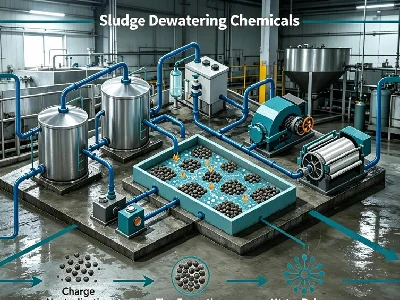
Chemical Dosing: This method utilizes coagulants and flocculants such as alum, polyaluminum chloride (PAC), aluminum sulfate, and polyacrylamide (PAM). Through mechanisms including charge adsorption and bridging, fine particles, colloids, and suspended solids are coagulated together and settled at the bottom. The supernatant, with turbidity and suspended solids brought within limits, is then discharged. This approach offers a high cost-performance ratio and has a long history of application.
Electrocoagulation: The underlying principle is similar to that of chemical precipitation; however, this method primarily employs ionization equipment to alter the direction of hydrolysis and ionization in wastewater, thereby achieving effective coagulation and flocculation. This is a method considered for sites with relatively high costs and stringent requirements for equipment and operation.
Sludge Sedimentation in Biological Treatment Systems: This method primarily leverages the biological treatment system-for instance, the secondary clarifier stage of an AAO process-where the naturally favorable settling properties of sludge under normal operating conditions substantially reduce the turbidity and suspended solids in the effluent. It is also the most cost-effective method in terms of operational expenses.