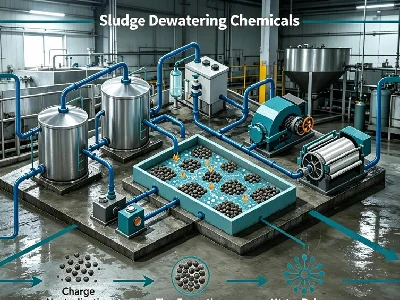
A demulsifier is a type of surfactant capable of disrupting the structure of an emulsion, thereby enabling the separation of its constituent phases. In the context of crude oil, demulsification involves using the chemical action of a demulsifier to separate oil and water within an emulsion; this process achieves crude oil dehydration, ensuring the oil meets standards for water content prior to transport.
One of the simplest and most effective methods for achieving the separation of organic and aqueous phases is the use of demulsifiers to eliminate the stable emulsified interface that forms between them. However, demulsifiers vary in their ability to break emulsions in organic phases, and their performance directly dictates the efficiency of phase separation. During penicillin production, a critical step involves extracting penicillin from the fermentation broth using an organic solvent (such as butyl acetate). Because the fermentation broth contains complex substances-including proteins, carbohydrates, and mycelia-the interface between the organic and aqueous phases often becomes indistinct, forming a stable emulsion zone that significantly impacts the final product yield. Consequently, demulsifiers must be employed to break the emulsion and eliminate this phenomenon, thereby facilitating rapid and effective phase separation.